Sennheiser Momentum 5 review: scored in 10 categories
I scored the Sennheiser Momentum 5 across 10 categories and ranked them against over 30 headphones. Transparency and sound are standouts, ANC is improved, and the battery is replaceable.

By James · Picky Audio
· 8 min read
WEIGHTED SCORE
88.9/100
88.25 before weighting

QUICK TAKE
- WEIGHTED
- 88.9/100
- UNWEIGHTED
- 88.25/100
- RANK
- #4 of over 30 headphones
If you value sound quality and a clear, natural transparency mode, the Sennheiser Momentum 5 deliver. They scored 9.75/10 for both sound and transparency, and the battery is user‑replaceable with 57 hours rated on ANC. Connectivity is strong with Bluetooth 5.4 and aptX Lossless built in.
Trade-offs: ANC strength is good but not class-leading, there’s no included dongle, and you can’t listen via the 3.5 mm aux when the headphones are powered off. If you’re on Momentum 4, the biggest upgrade is transparency; sound is a subtle refinement.
THE SCORECARD
Sennheiser Momentum 5
- CATEGORY SUM
- 88.25of 100, before weighting
- RANK
- 4of over 30 headphones
- CATEGORIES
- 10
- STRONGEST
- 10Battery life
- WEAKEST
- 7.5Call quality
Build quality
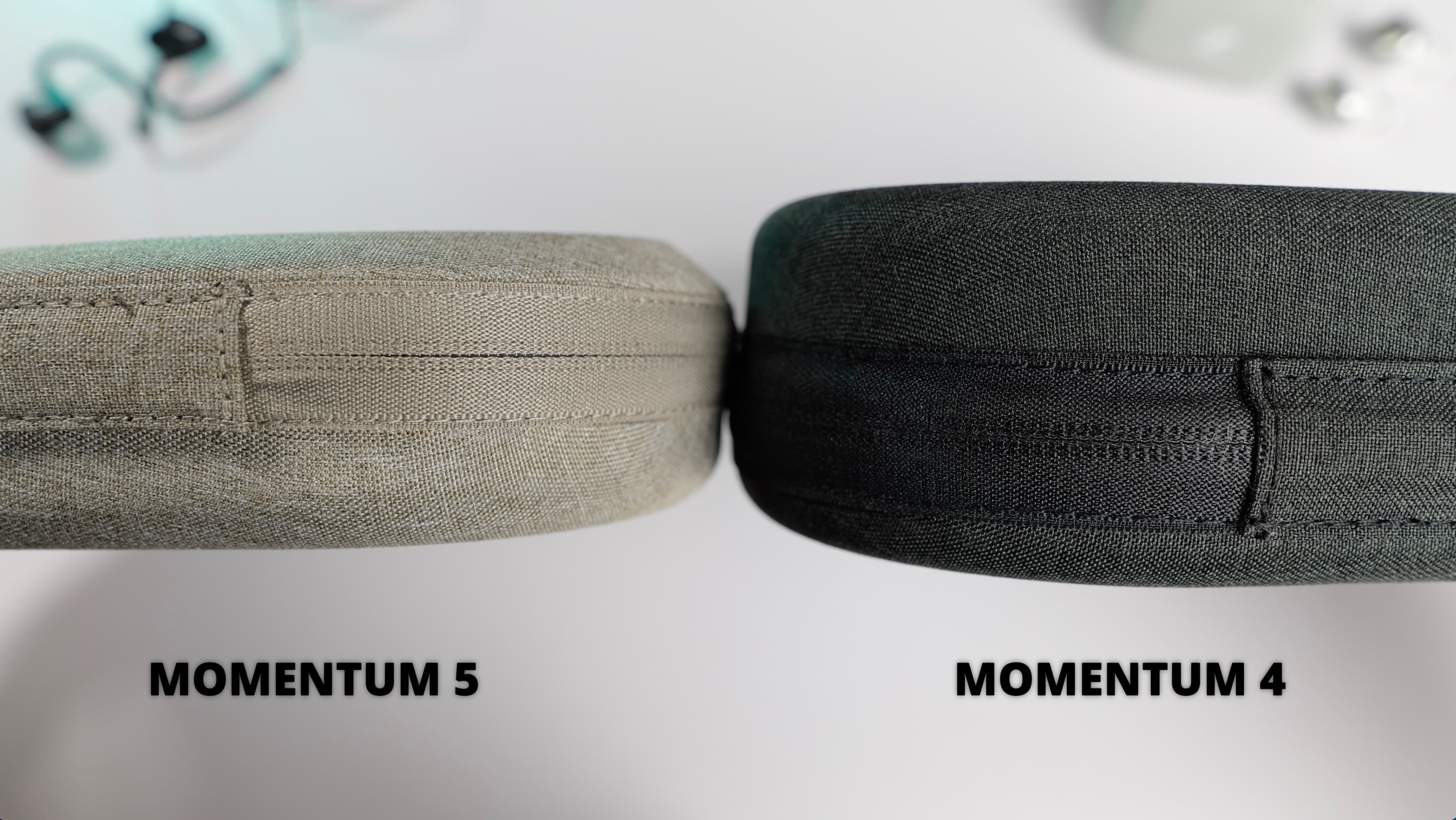
8/10Same overall build as Momentum 4/HDB 630 with a cleaner flush ear cup and thinner hard case; doesn’t fold but feels durable.
Fit
8/10Slightly more comfortable than Momentum 4 with lighter clamping; not the most spacious pads and not very breathable, but all‑day wearable.
Battery life
10/10Rated 57 hours with ANC on, 10‑minute charge for ~7 hours, user‑replaceable battery and a battery protection mode.
Controls
9/10Full touch controls with slight lag and beep feedback; dual wear sensors now require fully removing the headphones; no mic mute.
Connectivity
9.5/10Bluetooth 5.4 with AAC, aptX Adaptive and aptX Lossless; no bundled dongle; USB‑C and aux supported, but aux won’t play when powered off.
Call quality
7.5/10Very good in quiet rooms; struggles in crowd noise and only slightly better in wind than before.
App customization and extra features
8.5/10Solid app with Dolby Audio (head tracking), 8‑band EQ, sound personalization, Sound Zones, codec display; no parametric EQ; Comfort Call adds reverb.
Noise canceling
8.25/10Noticeably stronger than Momentum 4 and close to HDB 630; adjustable by percent, low hiss/pressure; wind-reduction cuts strength ~30%.
Transparency mode
9.75/10Huge leap—natural, clear, low occlusion and minimal hiss; wind pickup is low–moderate and there’s no adaptive blend mode.
Sound quality
9.75/10Warm, refined tuning with slightly deeper bass, a touch more forward mids and smoother treble than Momentum 4; realistic vocals, slightly closed stage.
The Pros and Cons
PROS
- Excellent, natural transparency (9.75/10)
- Warm, refined sound with realistic vocals (9.75/10)
- User‑replaceable battery; 57 hours rated with ANC
- aptX Lossless built in; Bluetooth 5.4
- Thinner hard case; cleaner flush ear cup design
- Low cabin pressure and minimal hiss on ANC
CONS
- ANC strength still trails the top class
- No mic‑mute option on calls
- Touch controls have slight lag/beep delay
- No included dongle; aptX Lossless support is limited on phones
- No passive aux playback when powered off
- Ear pads aren’t very breathable; lighter clamp can shift during intense movement
What changed from Momentum 4?
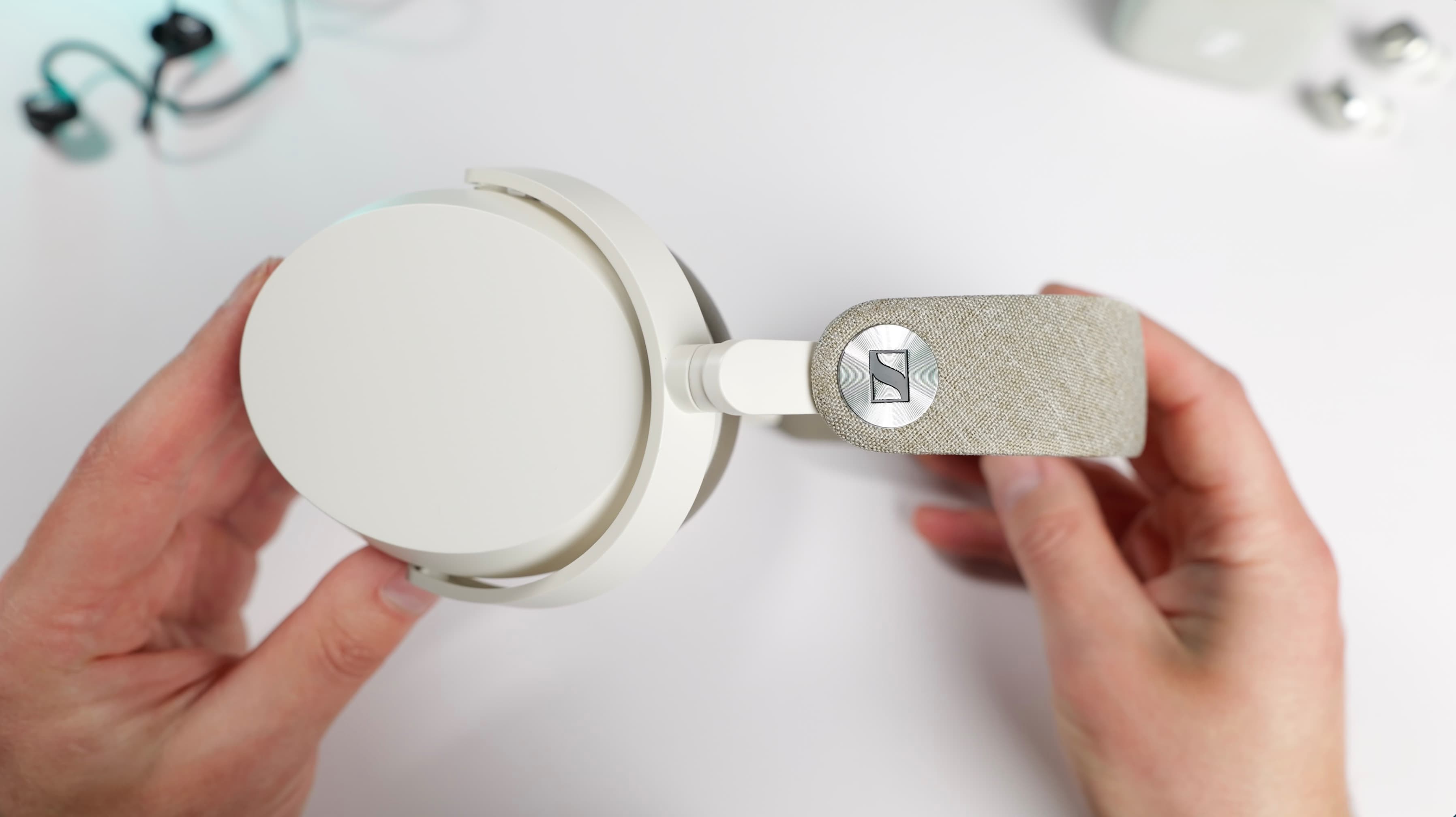
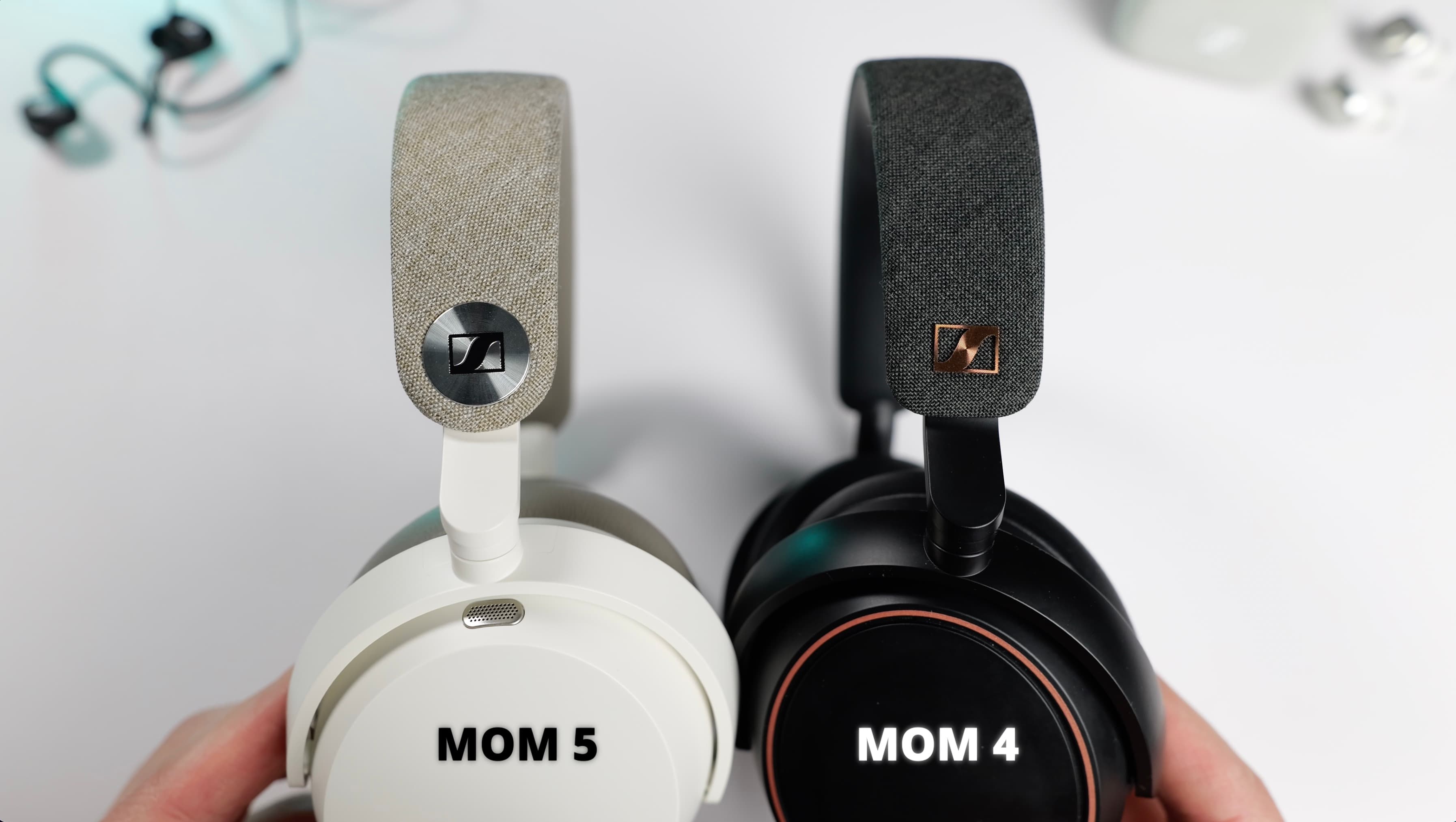
Design is basically the same but cleaner: the outer ear cup now sits flush and the case is much thinner. Build still doesn’t fold, but it feels durable and the mesh headband returns. The logo treatment is different, and I actually preferred the more minimal look on Momentum 4/630, but overall the Momentum 5 looks tidy and is built to last.
How comfortable is the fit?
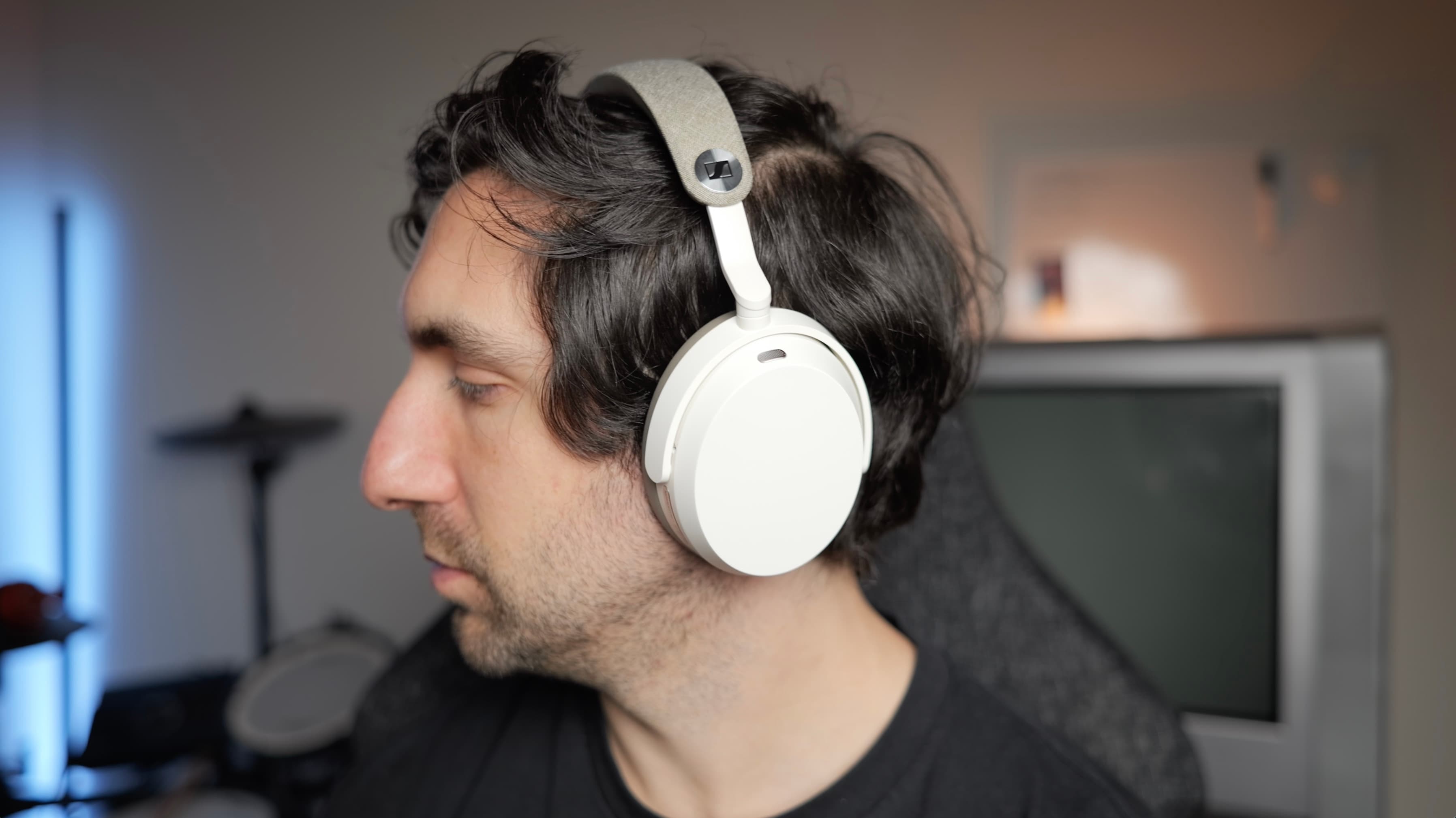
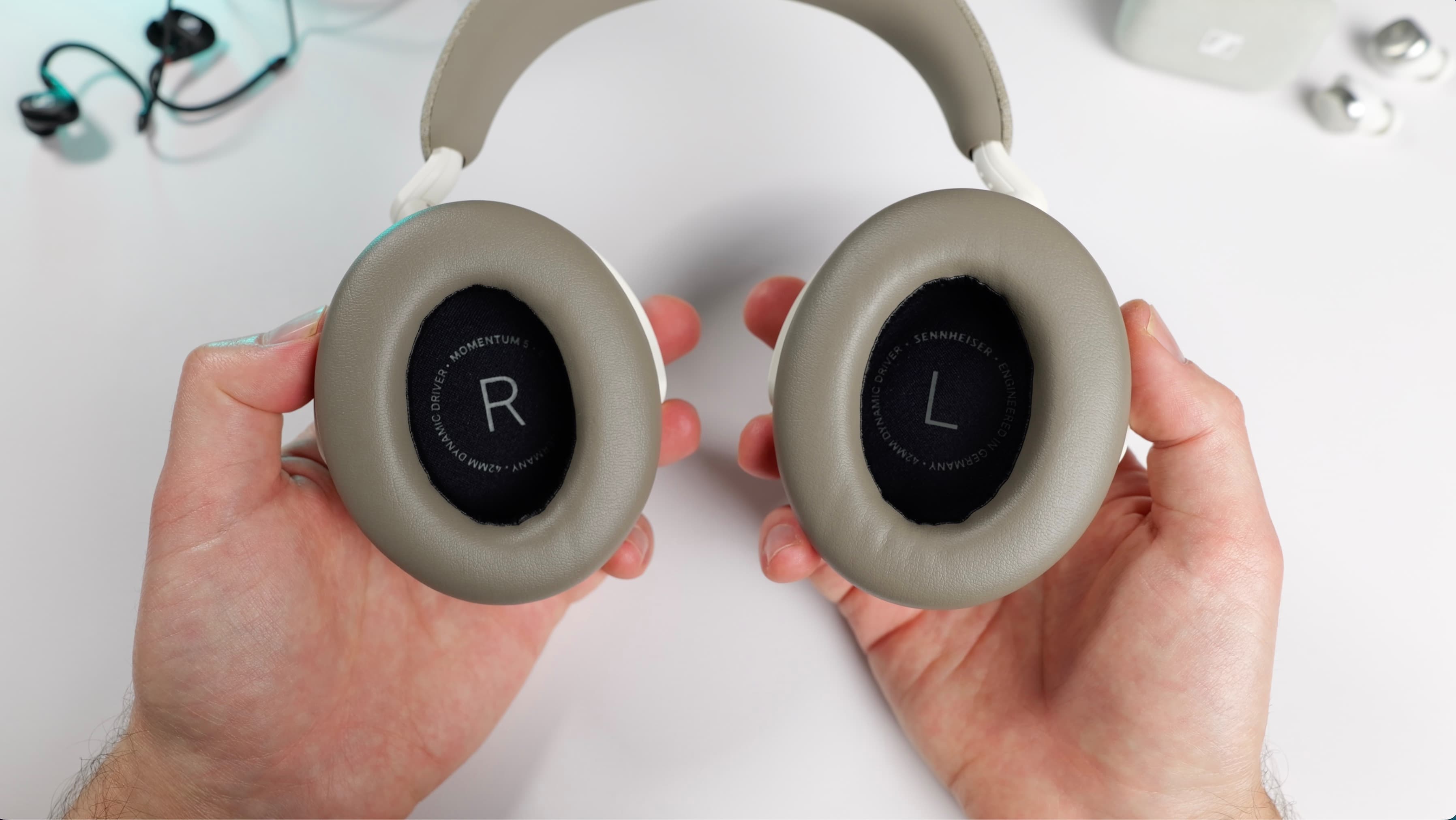
I rated fit 8/10. Clamp is a bit lighter than Momentum 4/630, which helps comfort but means hard, quick movements can shift the headphones. The pads aren’t the most spacious and they’re not very breathable, yet I can wear them all day without discomfort. Weight is 290 g but they feel light on head.
Battery and charging details
Battery scored a 10/10: 57 hours with ANC on, plus a fast charge that gives about 7 hours from 10 minutes. You can replace the battery yourself with a few screws—huge for longevity. There’s also a battery protection mode that limits and slows charging; I just leave it on. You can listen while charging.
Controls and wearing detection
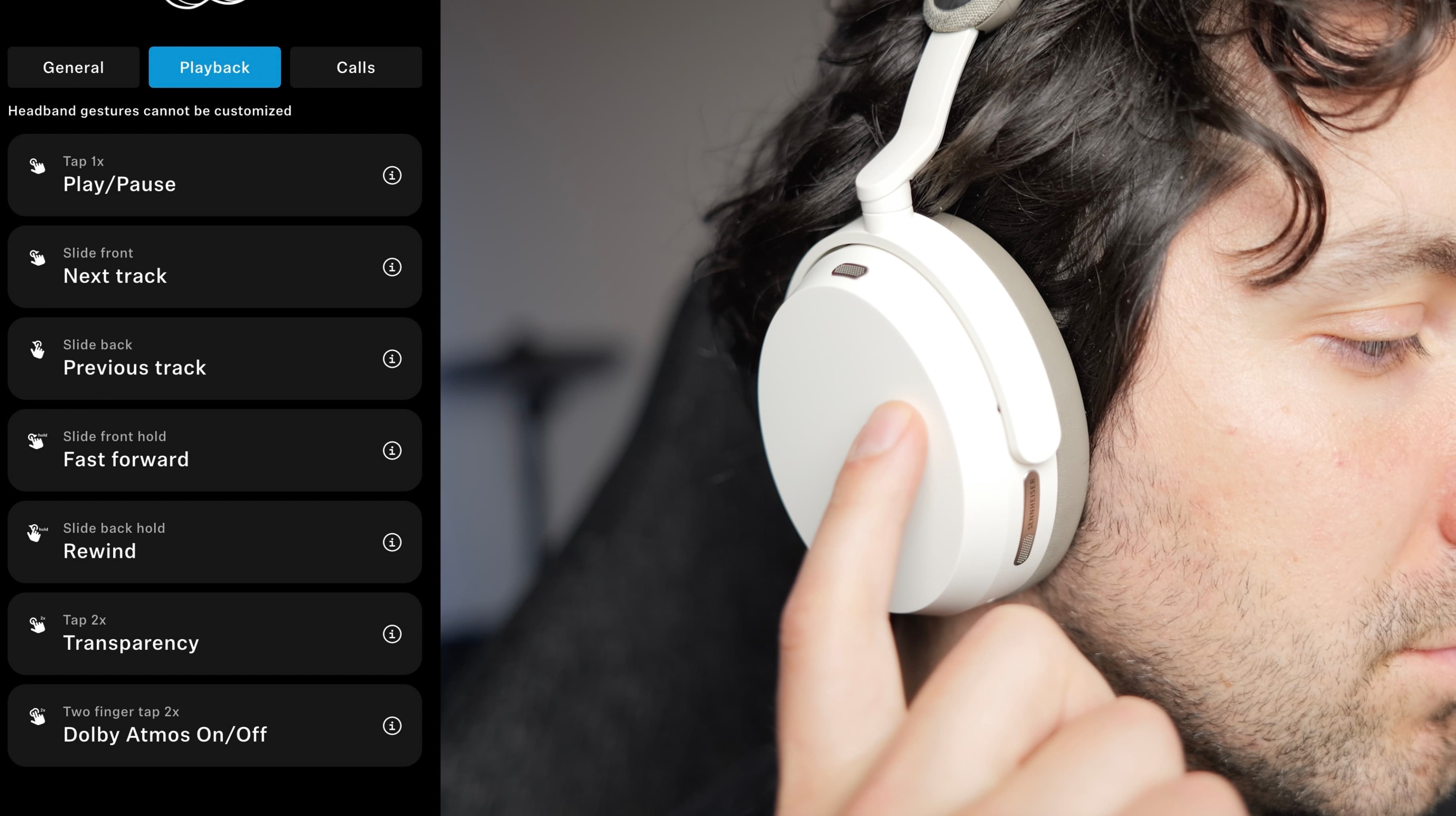
Controls scored 9/10. You get full touch controls including skip forward/back with the familiar slight lag and beep feedback. There are now two wear sensors (one per cup), so you need to fully remove the headphones to pause—less chance of accidental triggers. Still no mic mute on calls, though you can switch between calls easily.
Connectivity and codecs
Connectivity scored 9.5/10. You get Bluetooth 5.4 with AAC, aptX Adaptive and aptX Lossless. Most phones don’t support Lossless, which is where Sennheiser’s dongle would help—there isn’t one in the box here (the HDB 630 includes it), though you can buy it separately. Wired via USB‑C or aux is supported, but you can’t play over aux with the headphones powered off; USB‑C should still work. Multipoint doesn’t use takeover—you pause one device and play on the other to switch.
Call quality: quiet is good, noise is tougher
Calls scored 7.5/10. In a quiet room they sound better than most headphones I’ve tested. In simulated crowd noise they struggled, and in simulated wind/city noise they were slightly better than before, but still not great.
App features and EQ
The app/extra features scored 8.5/10. Highlights: Dolby Audio with head tracking (for Dolby Atmos content), an 8‑band EQ (up from five on Momentum 4), Sound Personalization, Find My, Sound Zones tied to locations, codec selection/readout, and toggles for wear detection, auto‑answer, and auto power‑off. No parametric EQ here (the HDB 630 has it). Comfort Call is meant to make voices more realistic, but it added reverb for me, so I turned it off.
How strong is the ANC?
ANC scored 8.25/10—noticeably stronger than Momentum 4, and close to HDB 630, especially for voices, but still behind the very best. You can set ANC strength by single‑percent steps, cabin pressure is low even at max, and hiss is minimal. There’s an automatic wind‑reduction mode, but enabling it reduces ANC strength by about 30%. Expect an audible EQ shift: switching from ANC to transparency raises treble/upper mids ~5%; turning ANC off drops sub‑bass ~10% and raises upper mids ~10%.
Transparency mode: finally excellent
Transparency scored 9.75/10—a massive upgrade over Momentum 4 and HDB 630. It’s natural and clear with very low occlusion and minimal hiss. Wind pickup is low to moderate and there’s no adaptive blend mode. You can adjust strength, and 100% sounded fine to me. It’s almost on par with the AirPods Max 2, which I’ve scored 10/10.
Sound quality and tuning
Sound scored 9.75/10. Max volume measured 98.8 dB in my test—middle of the pack and plenty loud. Versus Momentum 4, bass digs a little deeper, mids sit slightly more forward, and treble is smoother. Changes are subtle, but the overall presentation is more relaxed and still refined—bass stays punchy without bloat. Vocals are a Sennheiser strength here: realistic and unforced. The only knock is a slightly closed‑in stage, which I’m happy to trade for the cleanliness and realism. If you like a neutral stock tuning and a touch more definition/separation, the HDB 630 still has the edge; you can EQ the Momentum 5 toward that, but you won’t make them identical.
Should you upgrade from Momentum 4?
Upgrade for the transparency mode—that’s the big win. Sound is a small refinement, not a leap. Compared to the highest‑scored all‑rounders, Momentum 5 still trails in ANC strength and call performance, but the sound and transparency carry them.
Momentum 5 vs HDB 630
They’re basically cut from the same cloth. Momentum 5 gives you the replaceable battery, a much better transparency mode, a thinner case, and a lower price. HDB 630 includes the dongle, has parametric EQ, and remains the pick if you want a more neutral stock tuning with slightly better clarity.
Questions I keep getting
Do the Momentum 5 fold for travel?
No. Like Momentum 4 and HDB 630, they don’t fold. The case is much thinner than before, though.
Can I use them wired with a dead battery?
Not over the 3.5 mm aux—there’s no passive playback when powered off. Over USB‑C you should be able to listen while charging.
Is upgrading from Momentum 4 worth it?
If you care about transparency, yes—the jump is big. Sound is a subtle refinement. If you want stronger ANC or a bundled dongle, Momentum 4/HDB 630 or other flagships may suit you better.
THE VERDICT
The Sennheiser Momentum 5 finish with 88.25/100 before weighting and 88.9/100 after, ranked fourth among over 30 headphones I’ve tested. They aren’t the ANC champ, but the combo of excellent transparency, refined sound, and a replaceable battery makes them easy to recommend—especially if you value a realistic vocal presentation and a natural passthrough. If you’re torn between these and the HDB 630, choose by tuning and extras: Momentum 5 for warmer stock sound, transparency and the thinner case; HDB 630 for a more neutral take, bundled dongle and parametric EQ. If you’re on Momentum 4, upgrade mainly for transparency. Stay picky.
Everything mentioned in this review
TAGS
Disclaimer: As an Amazon Associate I earn from qualifying purchases.