Nothing Headphone (1) Pro Review: Up Their With The Best!
Nothing finally has a headphone whose core features stand out alongside its design. It needs plenty of EQ work, but the result impressed me.

By James · Picky Audio
· 7 min read
FINAL SCORE
90.35/100
QUICK TAKE
- SCORE
- 90.35/100
- RANK
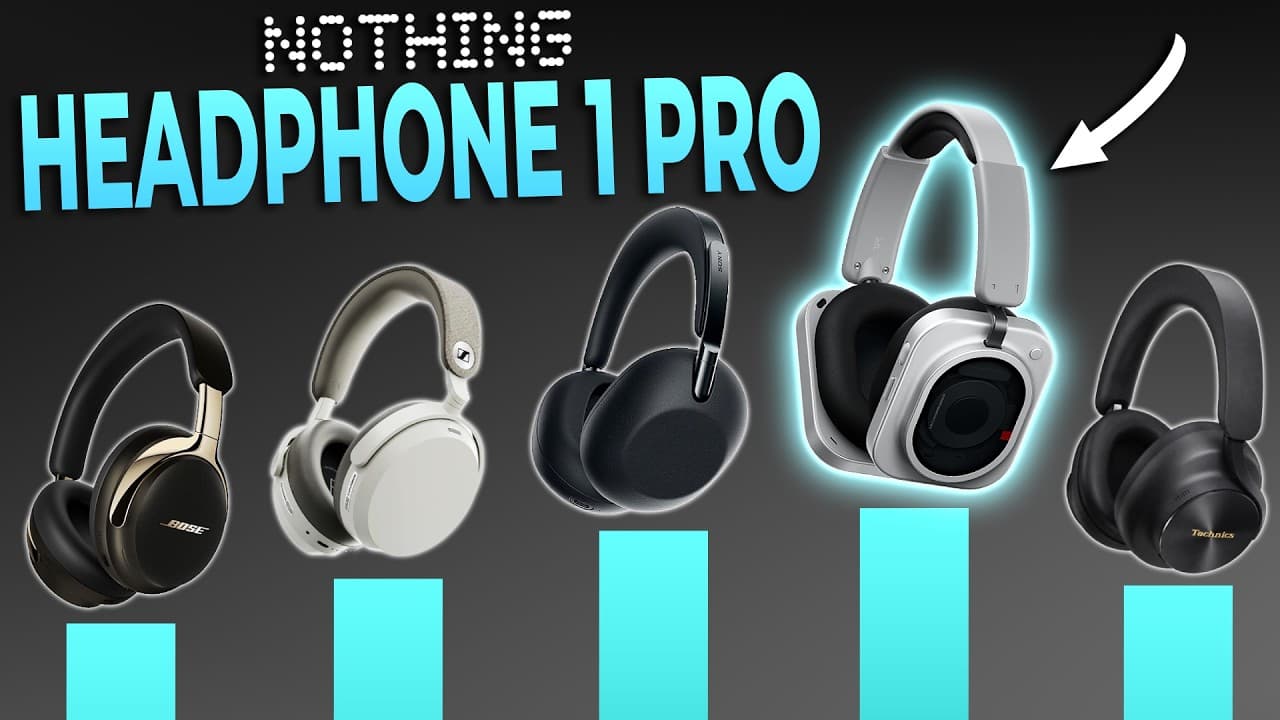
- #4 of over 35 headphones
In my Nothing Headphone (1) Pro review, it finished fourth against over 35 headphones, scoring 90.3 out of 100 after I weighted the important categories. Sound quality, noise cancelling and transparency are finally up there with the best headphones I've reviewed, rather than the design doing all the work.
The catch is sound tuning. I needed substantial EQ to get the best from it, and comfort, battery life and the case won't suit everyone. If you don't want to spend time with a parametric EQ, I wouldn't make this my first pick.
THE SCORECARD
How the Nothing Headphone (1) Pro scored
- RANK
- 4of over 35 headphones
- CATEGORIES
- 10
- RETAIL
- Retail price stated as $400 US or $700 Australian.
- STRONGEST
- 10Controls
- WEAKEST
- 7.5Battery life
Sound quality
9.25/10EQ cleaned up the bass, brought vocals forward and smoothed the treble, although I could only push vocal clarity so far.
Build quality
9.25/10The familiar design gets tougher glass, softer ear pads and a headband adjustment that stays in place better.
Fit
8.5/10The softer pads help a little, but the weight and limited space around my ears still cause some discomfort.
Battery life
7.5/10Nothing advertises 30 hours with noise cancelling on, which is less than the Headphone (1).
Controls
10/10The roller, paddle and physical switches make the controls intuitive.
Connectivity
9.5/10There are plenty of connection options, including multipoint, USB-C audio and a broadcast feature.
Call quality
8.5/10Call quality sounded solid and, to my ears, basically the same as the Headphone (1).
App customization and extra features
9.25/10The improved parametric EQ is the main upgrade, with flexible band placement and a bypass option.
Noise cancelling
9.1/10It is a big improvement over Nothing's earlier headphones, especially with voices and other middle- and high-frequency sounds.
Transparency mode
9.5/10Voices sound a little clearer and more natural than on the Headphone (1), though wind remains a problem.
The Pros and Cons
PROS
- Excellent sound after EQ, with an especially open soundstage for noise-cancelling headphones
- Flexible sound customization
- Intuitive physical controls
- Strong noise cancelling and transparency mode
CONS
- Stock tuning needs considerable EQ work
- Some discomfort for my larger ears after about 2 hours
- Battery life trails the Headphone (1)
- Transparency mode picks up too much wind
How does the Nothing Headphone (1) Pro sound?
I scored sound quality 9.25 out of 10, but that score needs context. The stock tuning is V-shaped, with boosted bass, crisp treble and slightly recessed mids. Vocals remain fairly clear, yet the bass sounds a bit bloated to me, vocals can get shouty, and the treble is too much.
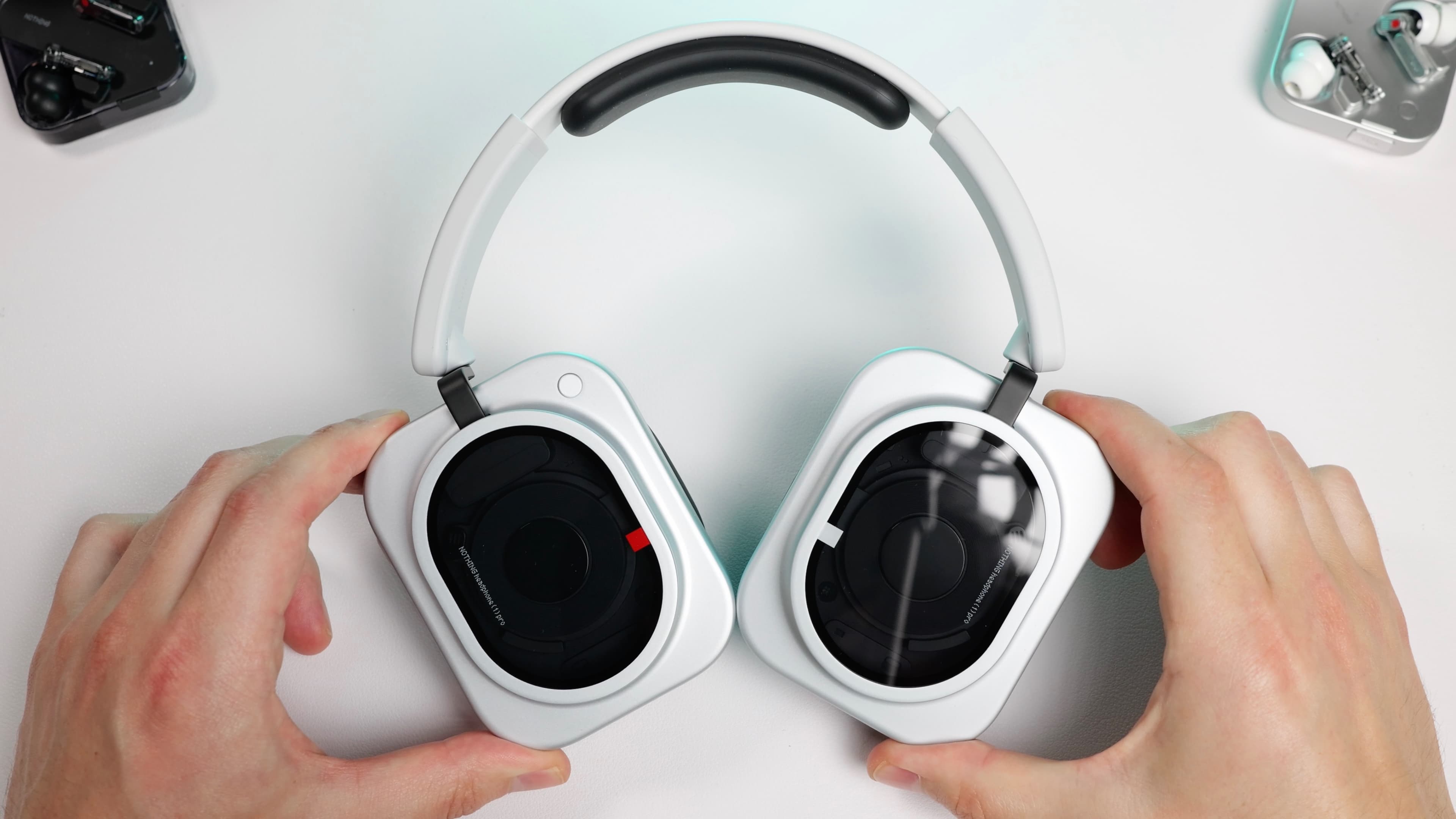
There's a switch inside the headphone for a flatter response. Volume-match it before comparing: that mode is louder, which can make it seem more detailed than it is. It cleans up the bass and improves vocal detail, but its treble is still over the top for me. You also lose transparency mode and can't EQ from that flat response; EQ works from the stock tuning instead.
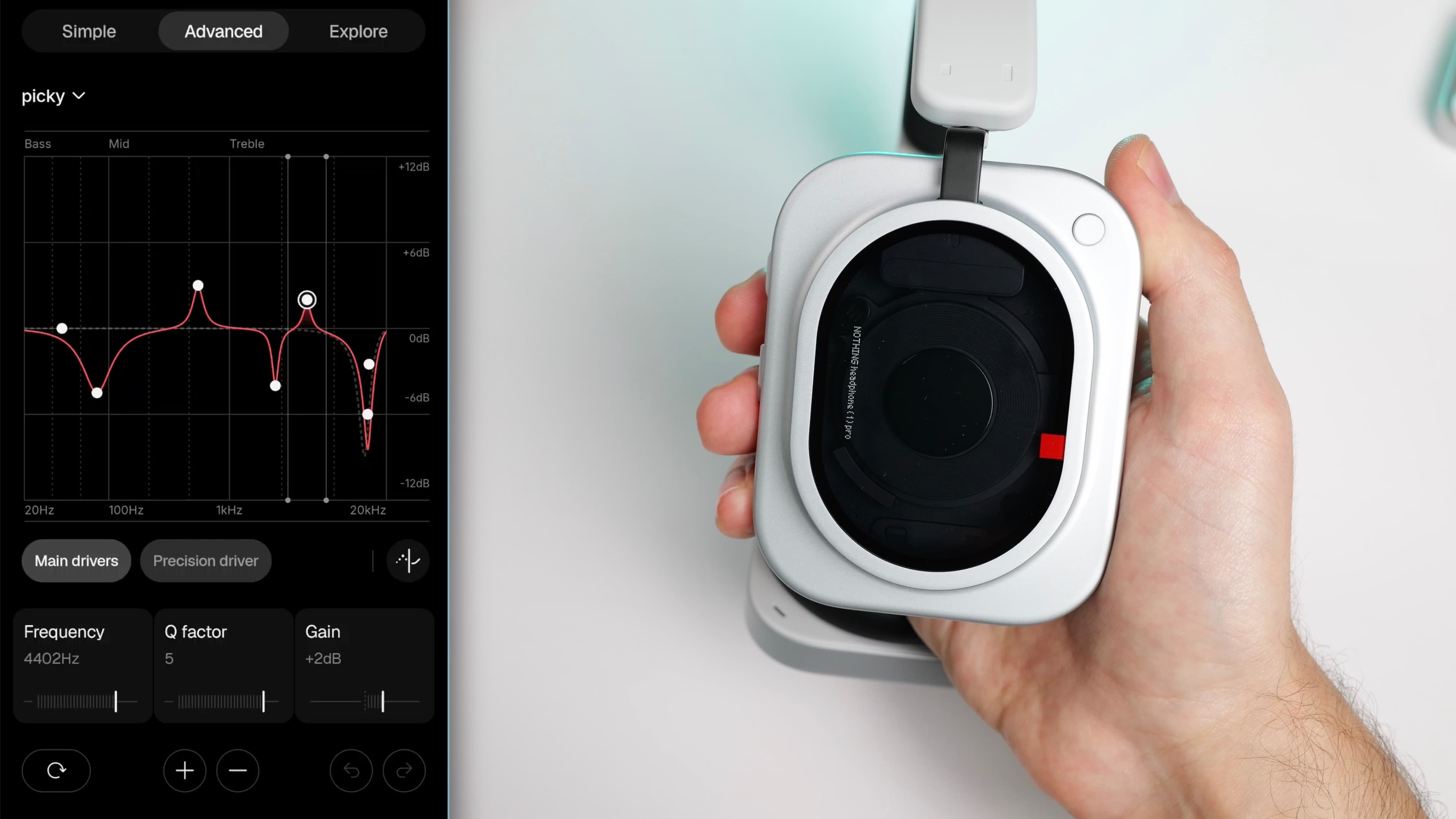
That's where these headphones came good for me. With the improved eight-band EQ, I reduced the mid-bass boom, adjusted the vocals and brought down the harsh treble. I also used the separate driver adjustment to smooth the top end further. I'm not an expert at EQing separate drivers, but the freedom here is impressive. After those changes, bass was cleaner and punchier, vocals were more forward without being as shouty, and the treble still had some sparkle. To my ears, this is the most open soundstage I've heard from noise-cancelling headphones.
My remaining complaint is that I can only get the vocals so clear and forward. I prefer the Sennheiser Momentum 5 for vocals and overall separation, even without EQ. If you want great sound without doing much tuning yourself, that's an important distinction.
Are the build, case and fit any better?
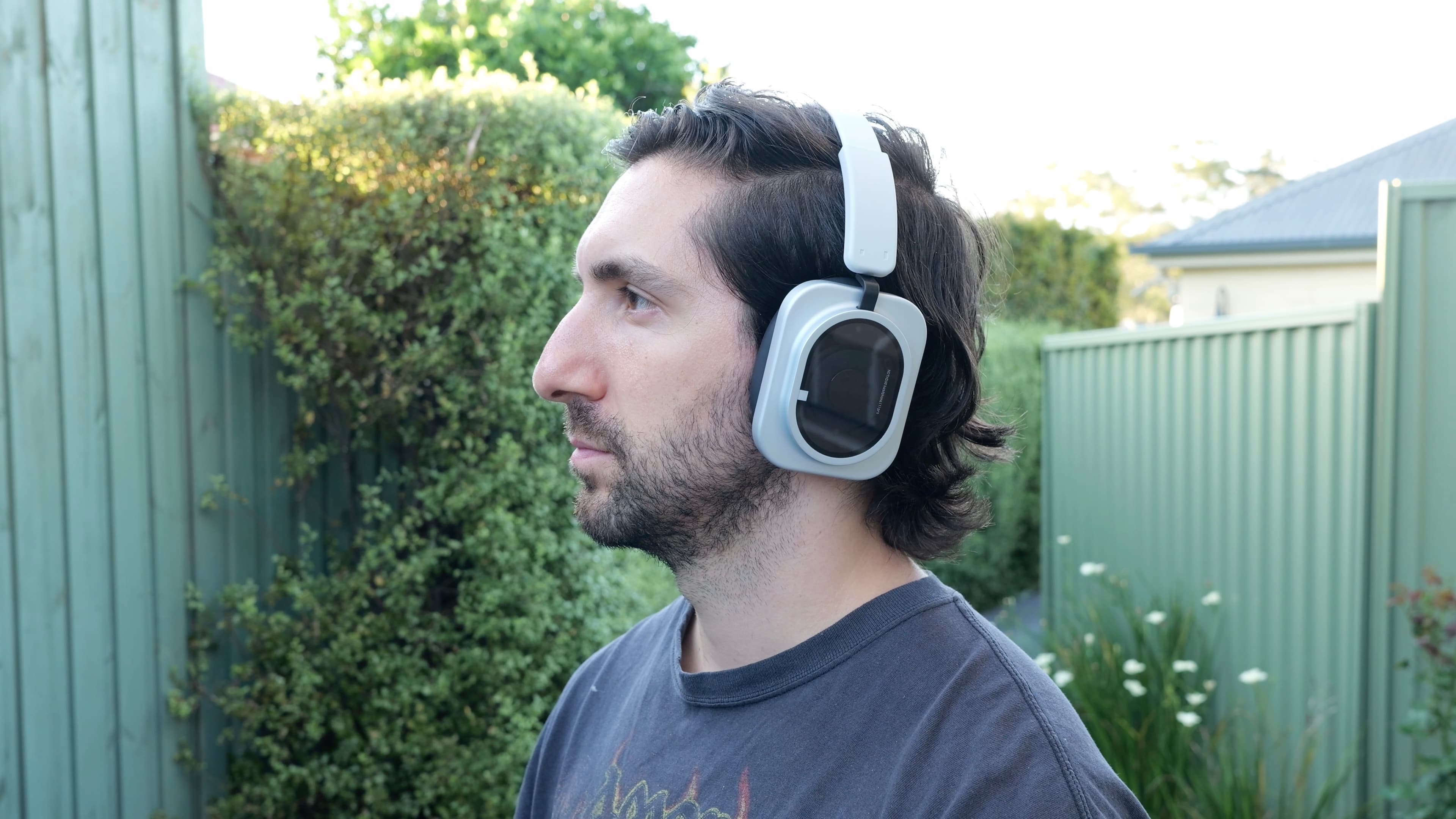
The overall design is much like the Headphone (1), with some useful refinements. The 9H Gorilla Glass is advertised as more scratch- and shatter-resistant, the ear pads feel softer, and the headband adjustment holds its position better. I like the new see-through design more than the flatter look of the Headphone (1). It's a solid, well-built headphone at this price.
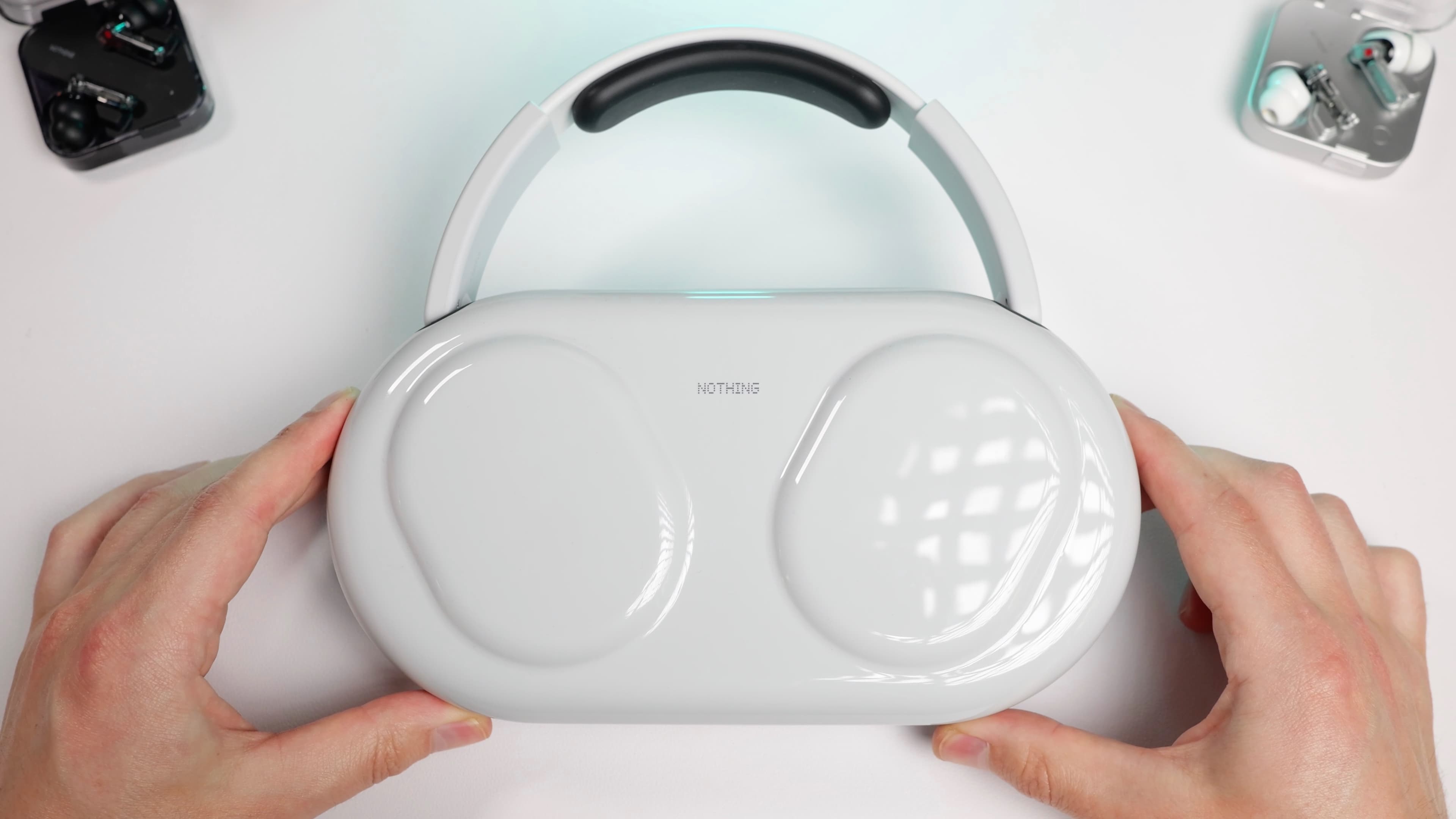
I'm less sold on the case. It's a solid hard case that protects the ear cups, and leaving the headband exposed means I don't have to readjust it every time. But it looks a bit cheap to me, doesn't give me the cable storage I'd prefer, and has no opening to charge the headphones while they're inside.
Fit is only a subtle improvement. The clamping force feels balanced on my large head, but the headphones still feel on the heavier side. My larger-than-average ears touch inside the pads, and I notice some discomfort in my left ear after about 2 hours.
What are the battery life and controls like?
Nothing advertises 30 hours with noise cancelling on and 68 hours with it off. The noise-cancelling figure is 5 hours less than the Headphone (1), though I think the changes to the drivers and noise cancelling make that a worthwhile trade-off. A 5-minute charge is advertised to provide 2 hours with noise cancelling on or 4 hours with it off. You can also keep listening over Bluetooth while charging.
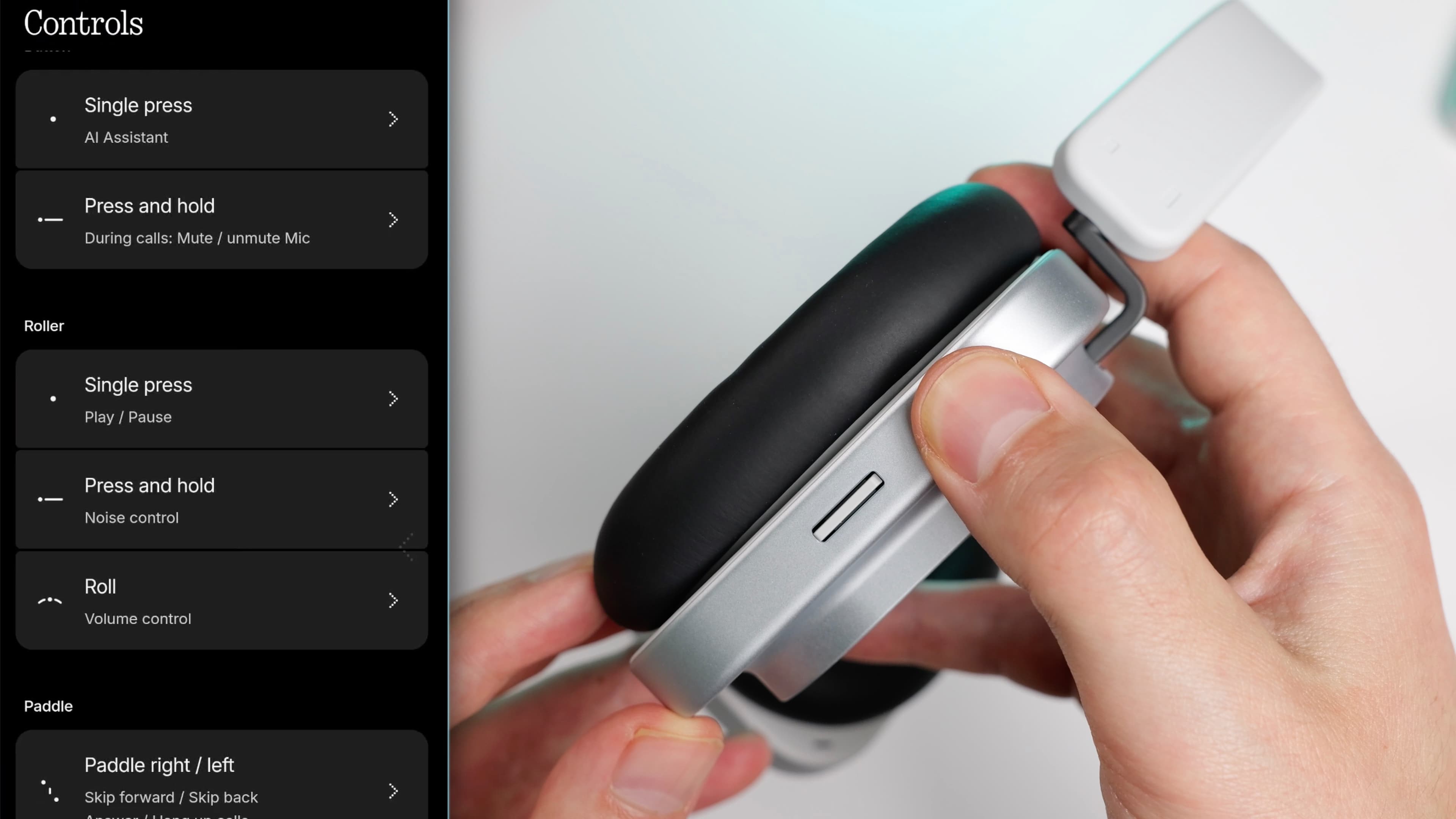
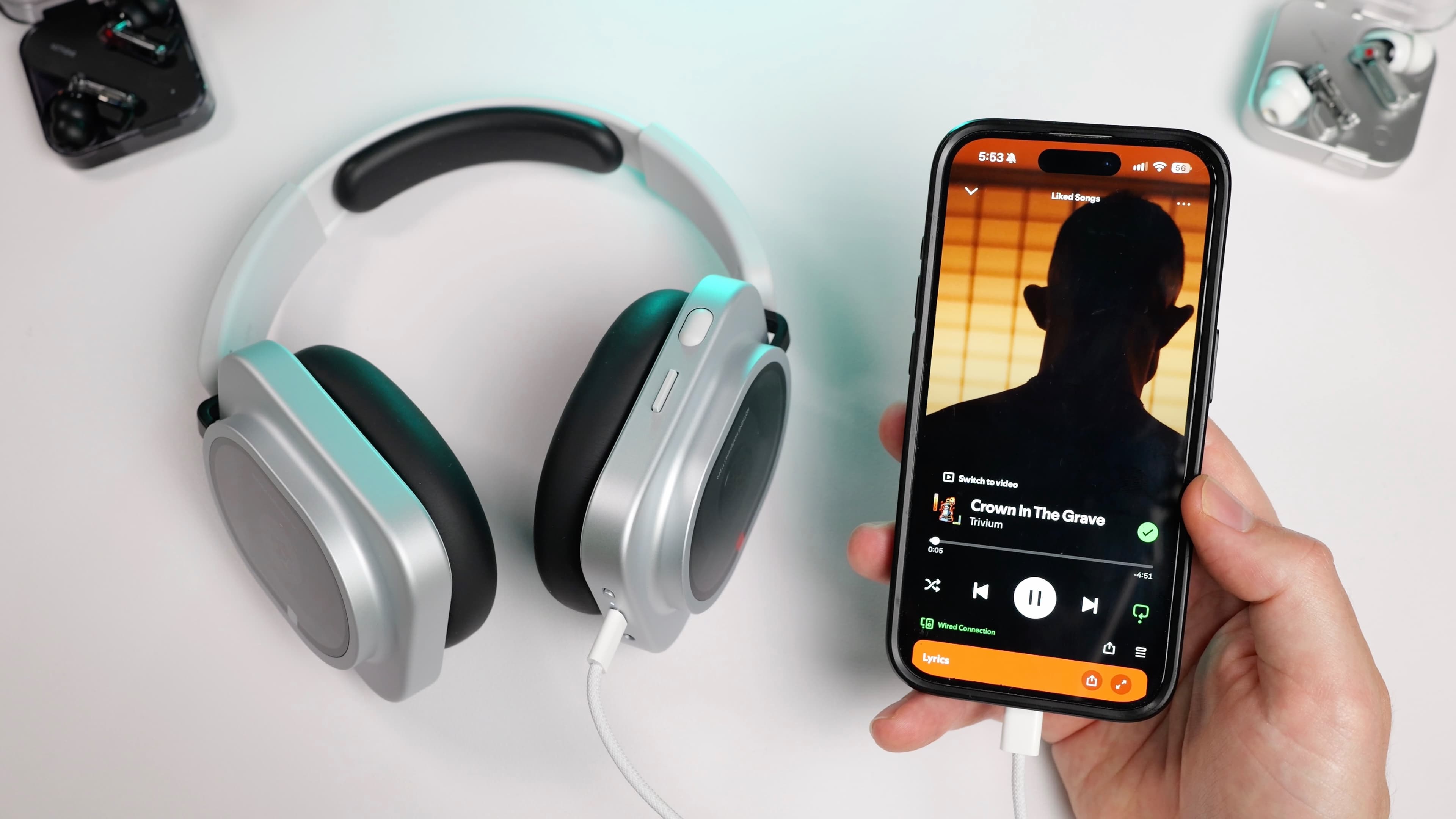
Controls are an easy 10 out of 10 for me. There's an on/off switch, a roller for volume and playback, a paddle for track navigation, and a customizable multifunction button. The new flat-response switch gives you another quick sound option. Wearing detection worked well in my testing.
How well do connectivity, calls and the app work?
Connectivity scored 9.5 out of 10. You get Bluetooth 6.1, SBC, AAC, LDAC, LC3, Google Fast Pair and Microsoft Swift Pair. LC3 here is specifically for the broadcast feature, not regular LC3 listening on any phone. Multipoint connects two devices, but switching playback requires pausing one before playing the other; there's no automatic takeover. Wired listening is available through USB-C or auxiliary, although the headphones need to be powered on for auxiliary listening.
Call quality scored 8.5 out of 10. Across my quiet-room, simulated crowd-noise and simulated windy-city tests, the Headphone (1) Pro sounded basically the same as the Headphone (1) to my ears.
The app's biggest draw is sound customization. The parametric EQ lets me place its eight bands where I want and use bypass to compare changes with the stock tuning. There's also a separate driver adjustment, a personalized hearing test, spatial audio options, multipoint settings and a find-my-headphones feature. I found the spatial modes a little strange, but the EQ is excellent.
How good is the noise cancelling and transparency?
Noise cancelling is a big step up from the Headphone (1) and Headphone A, earning 9.1 out of 10. Middle- and high-frequency sounds, including voices and typing, are noticeably better controlled. It performed as well as my highest-ranked headphones at blocking the lower frequencies in my plane-noise test, though those headphones handled some other sounds a little better. Hiss was barely noticeable to me, and wind pickup with noise cancelling was low.
Transparency scored 9.5 out of 10. Compared with the already good Headphone (1), voices are slightly clearer and more natural, with less hiss. My own voice sounds natural too. Outdoors on a windy day is another matter: wind can get quite loud, and the automatic wind reduction doesn't block it particularly well. Transparency also takes about 5 seconds to return after the wind stops.
THE VERDICT
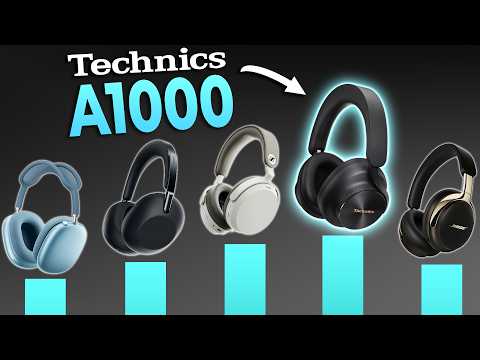
This is the first Nothing product I've reviewed where the core features, not just the design, are up there with the best. The Bose QuietComfort Ultra 2 offers better comfort and noise cancelling and is easier to get sounding good. I also have the Technics A1000 ahead as an all-rounder, while the Sony 1000X remains my number one at a higher price.
The Nothing Headphone (1) Pro has a few flaws, and I'd hesitate if you don't want to work on its EQ. If you do, it's one of the best headphones you can get at this price. Stay picky.
Everything mentioned in this review
TAGS
Disclaimer: As an Amazon Associate I earn from qualifying purchases.