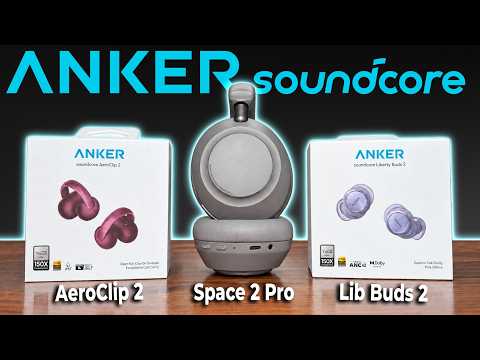
EarFun Wave Pro X Review: 81.7/100 With a Standout Parametric EQ
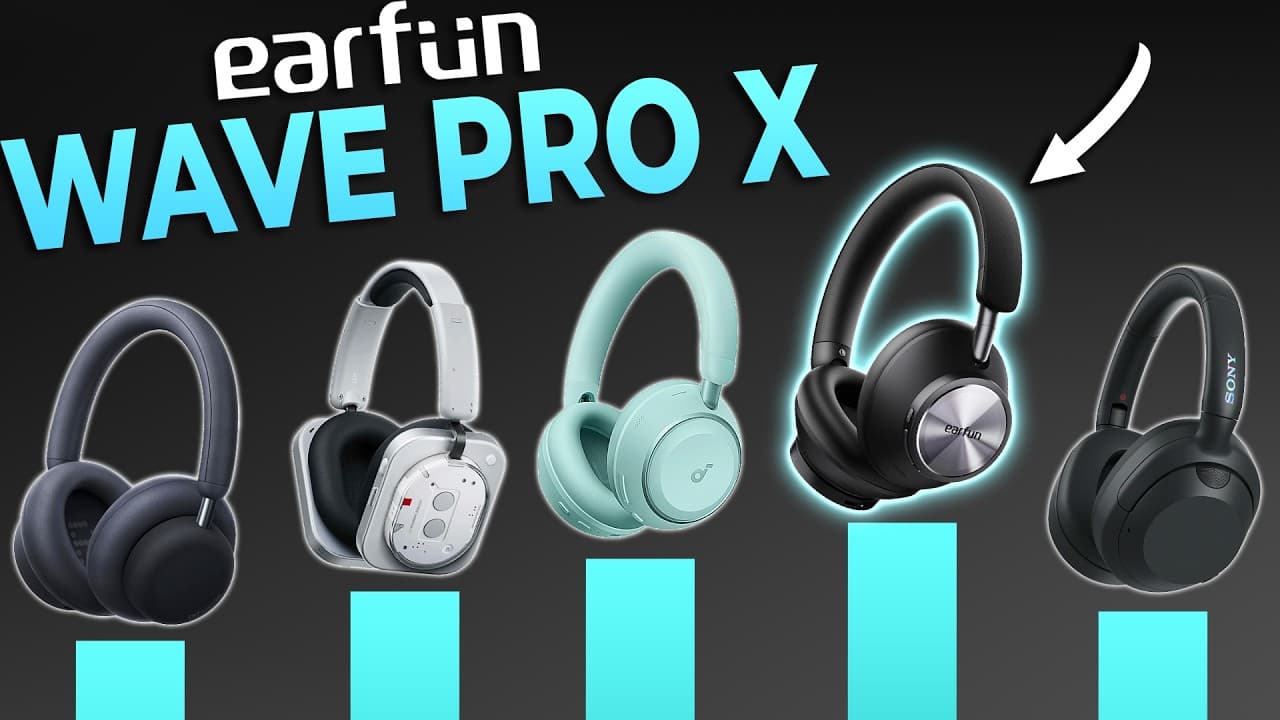
My EarFun Wave Pro X review found a comfortable, feature-packed budget headphone with unusually capable parametric EQ. The stock sound needs work, but the PEQ can turn it into the best-sounding option at this price.

By James · Picky Audio
· 6 min read
FINAL SCORE
82.2/100
QUICK TAKE
- SCORE
- 82.2/100
- RANK
- #15 of headphones at any price
The EarFun Wave Pro X is 100% worth it if you are willing to use its parametric EQ. The stock tuning is too bassy, muddy and harsh for me, with some stubborn sibilance, but the PEQ lets me fix those issues far more effectively than the regular 10-band EQ.
There are compromises: call quality is disappointing, and transparency has a noticeable white-noise hiss. Still, the hard case, spacious ear pads, lossless and LE Audio support, strong connectivity and excellent EQ flexibility make this a very compelling option for the price.
THE SCORECARD
How the Earfun Wave Pro X scored
- RANK
- 15of headphones at any price
- CATEGORIES
- 10
- RETAIL
- Regular price: $129.99. The description lists a final price of $103.99.
- STRONGEST
- 9.5Connectivity
- WEAKEST
- 6.7Call quality
Build quality
7.5/10The mainly hard-plastic build is improved by smoother hinges with less creaking and cracking, plus an included hard case.
Fit
8.75/10Wider, deeper ear pads, light weight and lighter clamping make these comfortable for my large head, though smaller heads may find the clamp too loose.
Battery life
8.5/10EarFun rates them for 50 hours with noise canceling on or 90 hours with it off, while a 15-minute charge gives 10 hours of playback.
Controls
8.25/10The customizable button controls add a useful call-mic mute function, but there is no fast-forward, rewind or wearing detection.
Connectivity
9.5/10Bluetooth 6.0, SBC, AAC, aptX Adaptive, aptX Lossless, LC3, Google Fast Pair, multipoint and wired USB-C or auxiliary listening make this unusually well equipped.
Call quality
6.7/10Call performance scored lower than the Wave Pro, and I was left wondering what happened to it.
App customization and extras
9/10The app earns its score mainly through its working parametric EQ, although saving an edit requires creating a new EQ preset.
Noise canceling
7.75/10ANC is particularly effective against consistent plane noise but less impressive with crowd noise and random music.
Transparency
8/10Transparency is clear and natural with low occlusion, but a high level of white-noise hiss holds it back.
Sound quality
8.25/10The stock tuning is overly bassy and harsh to my ears, while the parametric EQ can make the sound much smoother and more balanced.
The Pros and Cons
PROS
- Parametric EQ works incredibly well and can substantially improve the sound
- Spacious ear pads and a light feel on the head
- Bluetooth 6.0, lossless and LE Audio support
- Hard case included
- Clear transparency mode with low occlusion
CONS
- Stock tuning is boomy, muddy and can be harsh or sibilant
- Call quality is lower than the Wave Pro
- Transparency mode has a high level of white-noise hiss
- Saved EQ edits must be created as new presets
How comfortable is the EarFun Wave Pro X?
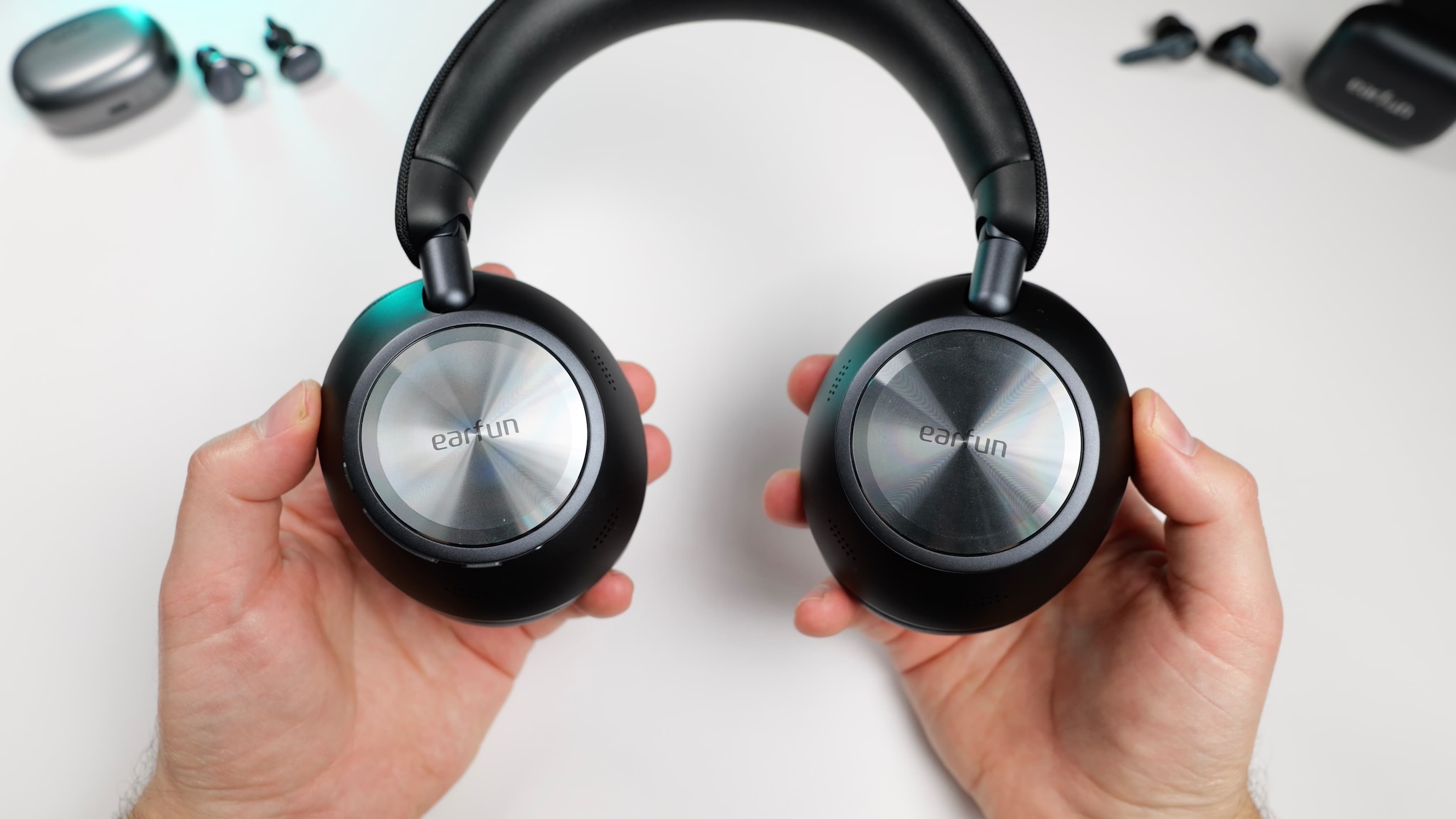
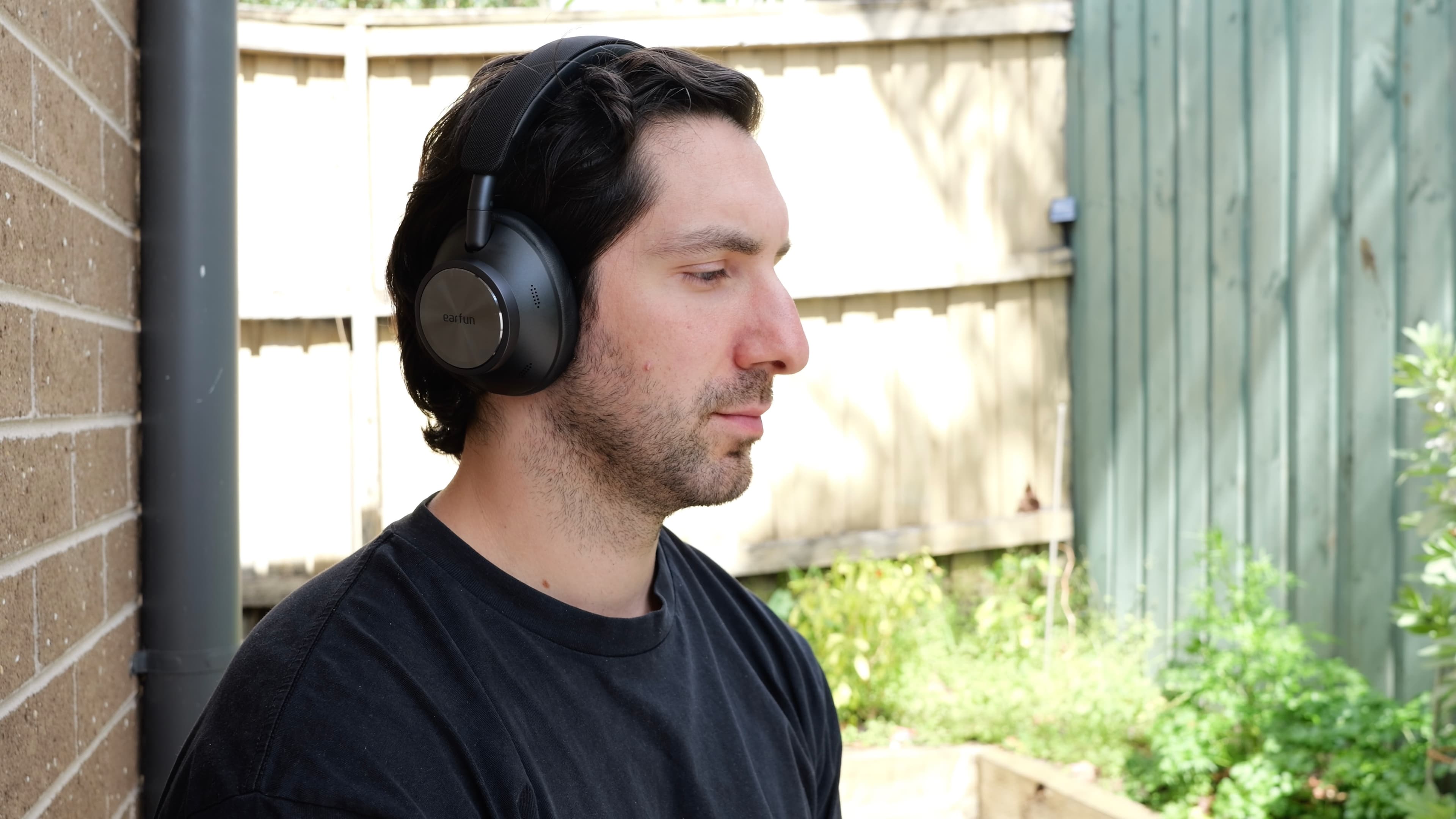
I scored fit at 8.75 out of 10. The ear pads are wider and deeper than those on the Wave Pro, and although my large ears still make slight contact inside the pads, the extra room is a welcome improvement.
The headband has good cushioning, the clamp is on the lighter side and the headphones feel light on my head. That balance works for me, but people with really small heads may find the fit insufficiently secure for exercise. The faux-leather pads are not especially breathable.
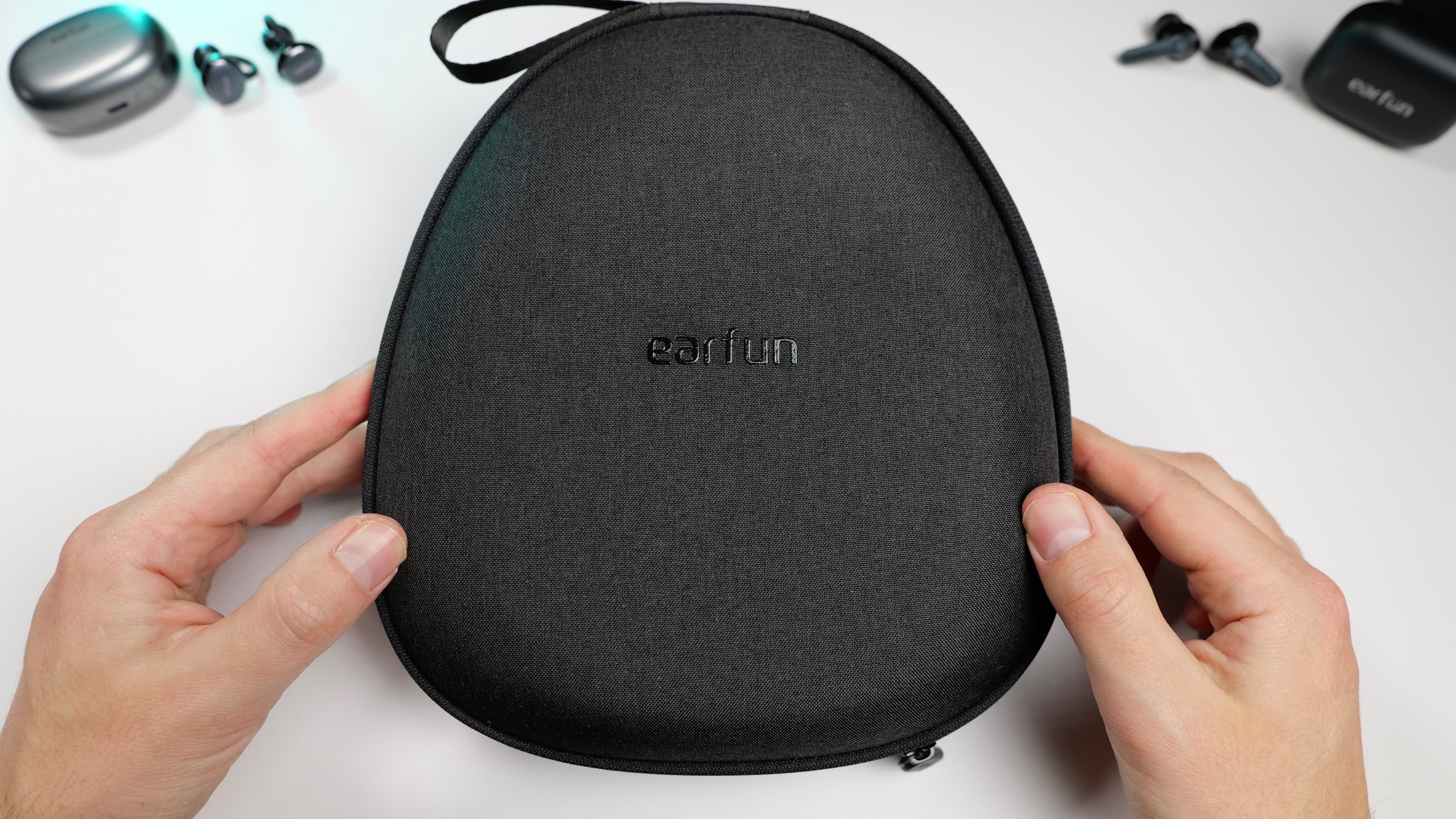
Build quality gets 7.5 out of 10. It is still mostly hard plastic, and I am not a huge fan of the shiny ear cups, but the hinges are smoother and creak less than the Wave Pro. The included hard case is large and feels a bit cheap inside, but it will protect the headphones.
Battery, controls and connectivity are unusually strong
EarFun rates the Wave Pro X for 50 hours with ANC on and 90 hours with ANC off. A 15-minute charge provides 10 hours of playback. You cannot charge and use Bluetooth at the same time, although USB-C audio from a phone will charge the headphones unless you disable that feature in the app.
Controls score 8.25 out of 10. I like the extra options on the noise-control button and the ability to customize controls in the app. The call-mic mute option is rare on headphones and genuinely useful. There is no fast-forward or rewind, and there is no wearing detection.
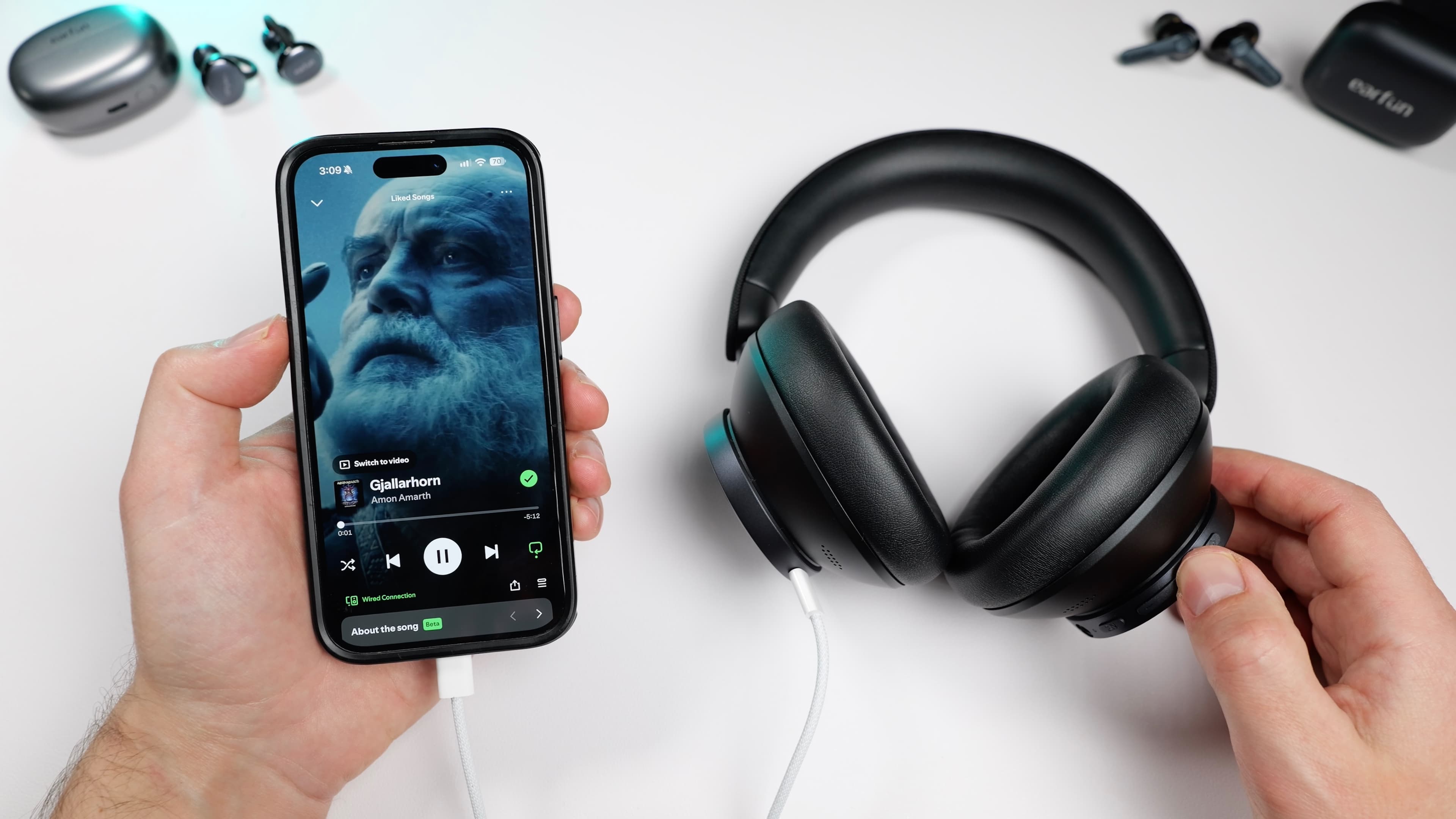
Connectivity is one of the biggest strengths, scoring 9.5 out of 10. You get Bluetooth 6.0, SBC, AAC, aptX Adaptive, aptX Lossless, LC3 and Google Fast Pair. USB-C and auxiliary connections are available, while USB-C lets you control media from the headphones. There is also multipoint and a low-latency gaming mode.
Call quality is the weak point
Call quality scores only 6.7 out of 10, lower than the Wave Pro. I tested it in a quiet room, with simulated crowd noise, and with city, construction and simulated wind noise. This is the category where the Wave Pro X takes a clear step backward.
ANC is good for planes, while transparency has hiss
I scored noise canceling at 7.75 out of 10. Set ANC to maximum for the strongest effect. There are also AI ear-adaptive, environmental-change and wind-noise-reduction modes. The wind mode blocks the microphones from picking up wind, but costs roughly 30 to 40% of the ANC strength.
The Wave Pro X performs especially well with consistent plane noise, although it takes around 15 seconds to reach its strongest effect. It is less convincing with inconsistent sounds such as crowd noise or loud music playing nearby. Cabin pressure is low even at maximum strength, and the sound changes very little between ANC, off and transparency modes.
Transparency scores 8 out of 10. Voices and distant sounds come through clearly, and my own voice has minimal blocked-ear effect. The downside is a persistent white-noise hiss that can sound like wind in the distance. The Natural mode reduces it somewhat, but also loses much of the clarity.
The parametric EQ is what makes the Wave Pro X special
At stock settings, I found the sound more dynamic and in-your-face than the Wave Pro, but not in a way I enjoyed. Bass is too bloated, muddy and boomy, the mids can be shouty, and treble can get harsh. Sibilance on S sounds, especially with some male vocals, was my biggest issue. I measured maximum volume at 101.8 decibels, so volume is not a problem here.
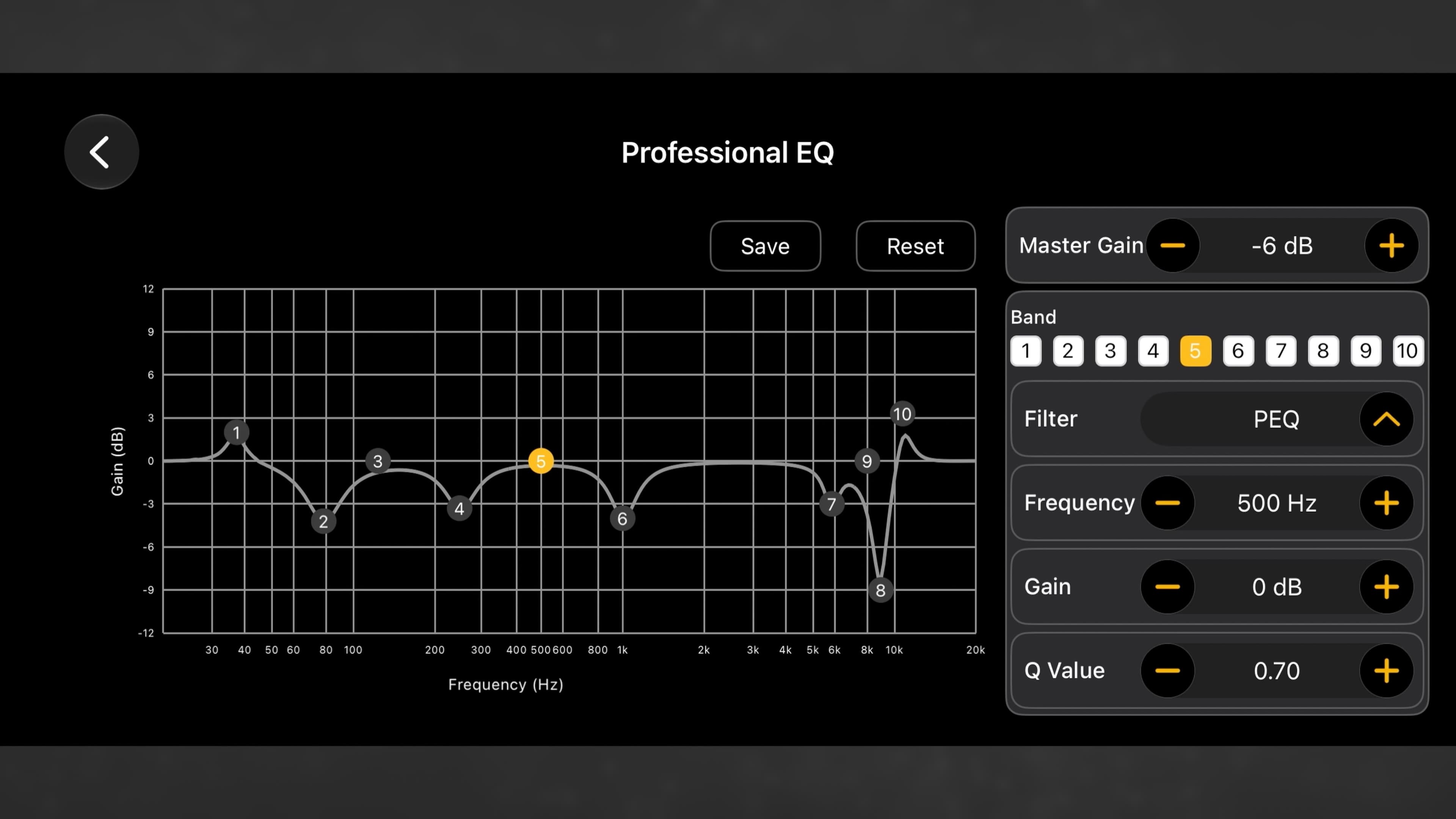
The regular 10-band EQ can reduce the excessive bass and smooth some treble, but it cannot fully remove the sibilance without taking away too much upper-mid detail. The app's parametric EQ changes that. I was able to identify the troublesome area at around 8,000 kHz and make a much narrower adjustment, while also tailoring bass, mids and upper treble.
The PEQ interface is not intuitive, and there is no undo, redo or bypass. It also still forces you to save a new EQ preset every time you make an adjustment. But it works incredibly well, and most headphones, including premium options, do not offer this level of adjustment.
THE VERDICT
The Wave Pro X finishes on 81.7 out of 100 and ranks 15th among headphones at any price after I customize the scoring. That looks low until you consider the price category: relative to price, it ranks second behind the Soundcore Space 2.
The Soundcore has advantages in call quality, wearing detection and easier EQ adjustment. The Wave Pro X brings a hard case, lossless and LE Audio, clearer transparency and, most importantly, a parametric EQ. If you use that PEQ, these are the best headphones I have heard at this price. Stay picky.
Everything mentioned in this review
TAGS
Disclaimer: As an Amazon Associate I earn from qualifying purchases.